
연구 성과

- 대학원
- 연구 성과
Design of Warship Simulation Using Variable-Chromosome Genetic Algorithm
- AI자율주행시스템공학과
- 2026-07-23
지승도 교수의 지능 시스템 연구실에서 발표한 논문 "Design of Warship Simulation Using Variable-Chromosome Genetic Algorithm"이 "Multi-Agent Systems" 2020년도 특집호에 게재되었다.
A genetic algorithm (GA) is a global search algorithm based on biological genetics. GAs are generally used for industrial applications, artificial neural networks, web applications, the defense industry, and so on. However, it is difficult to apply GAs to more complex situations because of the fixed number of chromosomes. In this research, in order to overcome this limitation, we propose a variable-chromosome GA with a chromosome attachment feature. Verification of the algorithm is carried out through anti-submarine high value unit (HVU) escort mission simulations. Ultimately, it is confirmed that the GA using the variable chromosome is more effective in dealing with highly complex missions, whereby the number of chromosomes gradually increases.
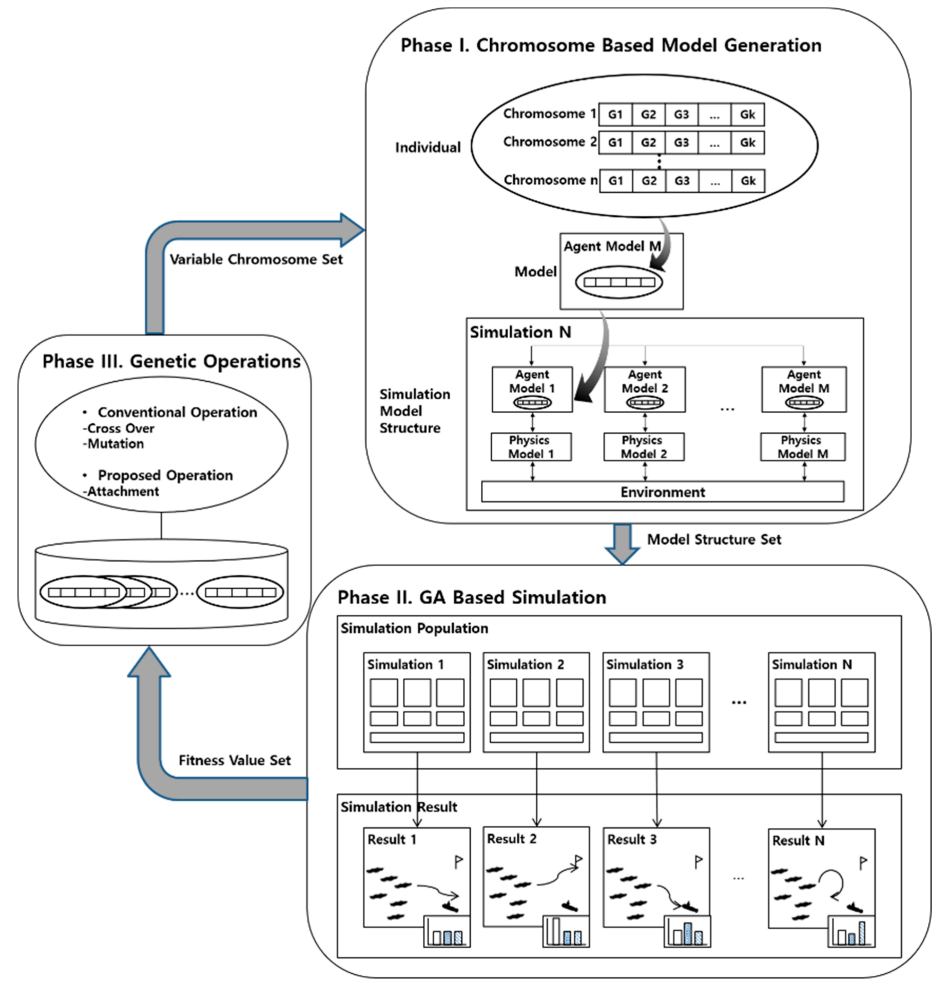
[Figure 1] Overall methodology
the chromosomes organized by genes. These chromosomes, which are loaded on each model, are composed of 10 random chromosomes for the first generation. There are 10 chromosomes in an individual for the first generation, however, more or less than 10 chromosomes can be implemented via attachment after some generations have passed. Accordingly, it is possible to achieve flexible evolution, as the number of chromosomes is increased or decreased as necessary.
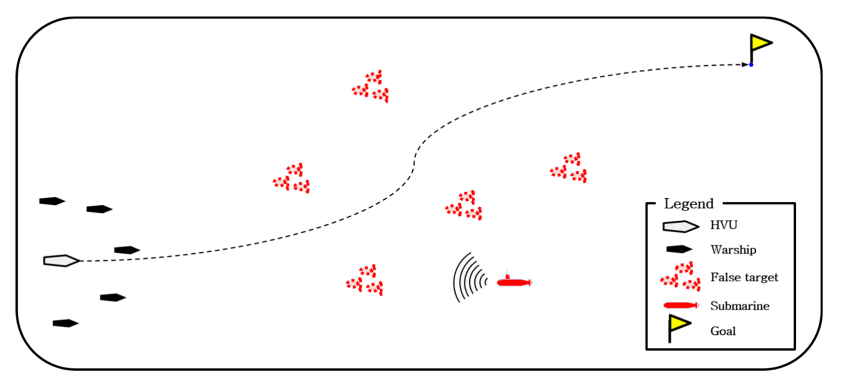
[Figure 2] Mission scenario
-
A Multi-Trip Vehicle Routing Problem for Small Unmanned Aircraft Systems-Based Urban Delivery
최영훈 교수의 IASL 연구실에서 발표한 논문 "A Multi-Trip Vehicle Routing Problem for Small Unmanned Aircraft Systems-Based Urban Delivery"가 "Journal of Aircraft 2019 (JA 2019)"에 게재되었다.
2026-07-23
▶ 논문 사이트로 이동
[그림 1] 도심항공네트워크 생성을 위한 프레임 워크
최영훈 교수의 IASL 연구실에서는 다개체 무인기를 활용하는 다양한 시나리오에 대한 임무 및 경로 계획 최적화에 관한 연구를 진행하고 있다. Journal of Aircraft에 실린 “A Multi-Trip Vehicle Routing Problem for Small Unmanned Aircraft Systems-Based Urban Delivery” 연구에서는 3차원 point cloud data를 활용하여 3차원 도시모델을 생성하고 이를 기반으로 항공 네트워크를 형성하는 프레임워크를 제안하였다. 또한 생성한 항공 네트워크를 활용하여 다양한 드론 배송 시나리오를 graph theory와 linear programming을 바탕으로 수학적인 모델링(정식화)를 통하여 비교 분석한 결과를 제시하였다.
-
Energy-Constrained Multi-UAV Coverage Path Planning for an Aerial Imagery Mission Using Column Generation
최영훈 교수의 IASL 연구실에서 발표한 논문 "Energy-Constrained Multi-UAV Coverage Path Planning for an Aerial Imagery Mission Using Column Generation"가 "Journal of Intelligent & Robotic Systems 2019"에 게재되었다.
2026-07-23
▶ 논문 사이트로 이동
[그림 1] ABECOM과 RBECOM의 경로 탐색 결과 비교
Journal of Intelligent & Robotic Systems에 실린 “Energy-Constrained Multi-UAV Coverage Path Planning for an Aerial Imagery Mission Using Column Generation” 연구에서는 UAV를 활용하여 특정 지역을 스캔하는 임무를 다루었다. 이러한 임무는 정찰, 영상/이미지 촬영, 수색/구조 등의 다양한 임무로 확장되어 활용될 수 있다. UAV를 이런 임무를 수행할 때에는 최대한 회전비행을 하는 횟수를 줄이는 것이 중요한데 기존의 선형계획법을 활용한 경로 생성 방법으로는 항공기의 회전비행 특성을 반영하기가 어려웠다. 그 이유는 회전의 유무는 직전에 방문했던 waypoint와 다음에 방문할 waypoint가 결정된 뒤에 알 수 있는데 이 조건을 선형으로 표현하기 힘들기 때문이다. 이 연구에서 linear programming과 dynamic programming을 결합한 column generation 알고리즘을 통하여 이 문제를 해결할 수 있음을 보였다.