
연구 성과

- 대학원
- 연구 성과
Stereo Confidence Estimation via Locally Adaptive Fusion and Knowledge Distillation
- AI자율주행시스템공학과
- 2026-07-23
김선옥 교수의 연구실에서 발표한 논문 "Stereo Confidence Estimation via Locally Adaptive Fusion and Knowledge Distillation"이 "IEEE Transactions on Pattern Analysis and Machine Intelligence (TPAMI)"에 게재 승인되었다. IEEE TPAMI는 세계 최고 권위의 인공지능 학술지 중 하나로, Impact factor가 24.3점에 달한다. 본 연구는 김선옥 교수가 제 1 저자로 주도했으며, 스위스의 로잔 연방 공과대학교(EPFL), 연세대학교, 고려대학교, 이화여자대학교가 공동으로 참여하였다.

Stereo confidence estimation aims to estimate the reliability of the estimated disparity by stereo matching. Different from the previous methods that exploit the limited input modality, we present a novel method that estimates confidence map of an initial disparity by making full use of tri-modal input, including matching cost, disparity, and color image through deep networks. The proposed network, termed as Locally Adaptive Fusion Networks (LAF-Net), learns locally-varying attention and scale maps to fuse the tri-modal confidence features. Moreover, we propose a knowledge distillation framework to learn more compact confidence estimation networks as student networks. By transferring the knowledge from LAF-Net as teacher networks, the student networks that solely take as input a disparity can achieve comparable performance. To transfer more informative knowledge, we also propose a module to learn the locally-varying temperature in a softmax function. We further extend this framework to a multiview scenario. Experimental results show that LAF-Net and its variations outperform the state-of-the-art stereo confidence methods on various benchmarks.
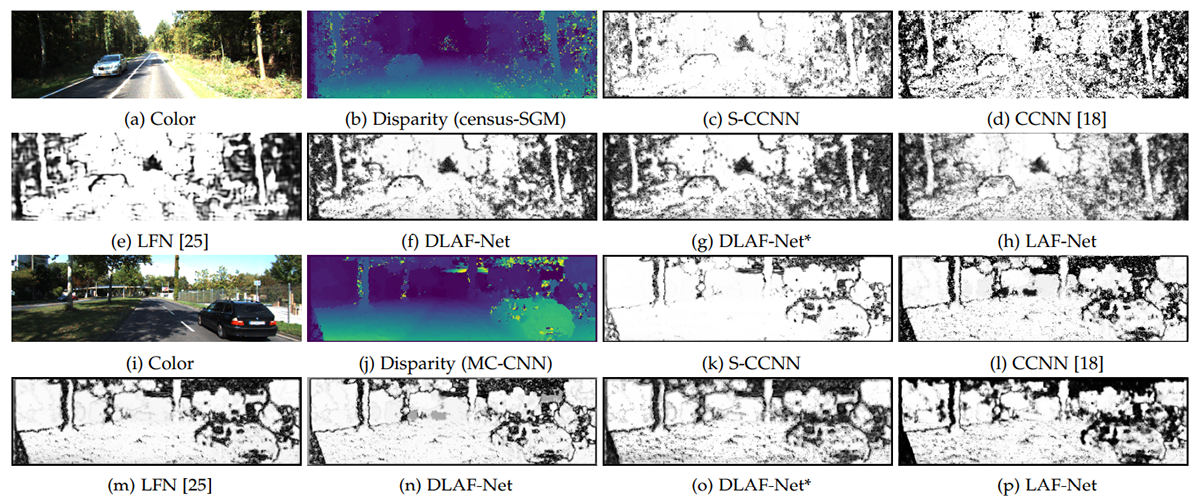
[Figure 2] Confidence maps on KITTI 2015 dataset
 첨부파일
첨부파일-
해군분석모델용 AI-CGF를 위한 시나리오 생성 모델 설계(I): 진화학습
지승도 교수의 연구실에서 해군 지능형 가상 군사(AI-CGF) 모의 기술을 연구하여 발표한 논문 "해군분석모델용 AI-CGF를 위한 시나리오 생성 모델 설계(I): 진화학습"이 "한국군사과학기술학회지" 12월호에 게재되었다. 본 연구는 워게임에서 인간 대신 AI를 접목한 최초의 시도에 대한 타당성을 검토한 연구로, 그 타당성이 충분히 입증되어 내년부터 보완 및 확장 연구를 추진할 예정이다.
2026-07-23
[그림 1] 전체 시스템 개요도
본 논문은 진화학습을 적용한 해군분석모델용 AI-CGF를 위한 시나리오 생성 모델을 설계하였다. 제안된 모델은 유전자 풀, 진화학습 제어기, 몬테카를로 시뮬레이션 제어기를 통해 해군분석모델에 전술 시나리오를 전달함으로써 진화학습을 시작한다. 진화 과정에서 선택, 교배, 변이의 진화 연산이 적용되었다. 총 5가지의 청군 전술 시나리오에 대하여 제안된 진화학습을 실험한 결과 전술적 가치가 높은 홍군 전술 시나리오를 생성할 수 있었다. 다만, 구성한 세력 상에서 높은 적합도가 곧바로 홍군의 승리를 의미하지는 않는 것으로 확인되었다. 그런데도 상륙전의 경우 청군의 이동 경로를 길게 가져가도록 유인함으로써 상륙 목표를 성공적으로 달성하는 고도의 전술도 확인할 수 있었다. 본 논문은 해군분석모델용 AI-CGF에 진화학습을 최초로 적용하였다. 이를 통해 인간이 설계한 청군 전술 시나리오에 대한 홍군 전술 시나리오를 자동 생성함으로써 논리적이며 수준이 높은 전술 시나리오 생성 능력을 확보할 수 있었다. 진화학습을 이용한 시나리오 생성모델은 유전 알고리즘을 통해 최적의 시나리오를 생성할 수 있다는 장점을 갖고 있으나, 학습과정에서 과도한 시간이 소요된다는 단점 또한 갖고 있다. 이를 해결하기 위해 지도 및 강화학습을 활용한 시나리오 생성 모델에 관한 연구를 후속 연구 논문에서 서술한다.
-
Event-Based Emergency Detection for Safe Drone
지승도 교수의 연구실에서 인공지능 드론의 안전 시스템을 위한 이벤트 기반 지능 제어 기법을 연구하여 발표한 논문 "Event-Based Emergency Detection for Safe Drone"이 SCI급 국제 우수 등재 저널인 "Applied Sciences" 2022년 8월 호에 게재되었다.
2026-07-23
▶ 논문 사이트로 이동
[Figure 1] Abnormal running time with / without proposed event-based emergency detection
Quadrotor drones have rapidly gained interest recently. Numerous studies are underway for the commercial use of autonomous drones, and distribution businesses especially are taking serious reviews on drone-delivery services. However, there are still many concerns about urban drone operations. The risk of failures and accidents makes it difficult to provide drone-based services in the real world with ease. There have been many studies that introduced supplementary methods to handle drone failures and emergencies. However, we discovered the limitation of the existing methods. Most approaches were improving PID-based control algorithms, which is the dominant drone-control method. This type of low-level approach lacks situation awareness and the ability to handle unexpected situations. This study introduces an event-based control methodology that takes a high-level diagnosing approach that can implement situation awareness via a time-window. While low-level controllers are left to operate drones most of the time in normal situations, our controller operates at a higher level and detects unexpected behaviors and abnormal situations of the drone. We tested our method with real-time 3D computer simulation environments and in several cases, our method was able to detect emergencies that typical PID controllers were not able to handle. We were able to verify that our approach can provide enhanced double safety and better ensure safe drone operations. We hope our discovery can possibly contribute to the advance of real-world drone services in the near future.